
Look at any box of safety shoes and you will see codes printed on it — SB, S1, S1P, S3, sometimes SRC too. Most people never read these codes. They just check the price and the size.
This is a problem. If the wrong shoe is used on the wrong site, it will not protect the worker properly. A nail can go through the sole. A heavy object can hurt the toe. And then everyone asks why the “safety shoes” did not work.
The real answer is simple: the shoe was made for a different type of danger, not the one on that site.
This guide explains what each code means, in plain words, so you can pick the right shoe for your site.
What Is the Standard Behind These Codes?
In India, safety shoes are tested under a standard called IS 15298 (Part 2). This is close to the international standard EN ISO 20345. If a shoe has a code like SB, S1, or S3 on it, it means the shoe has passed real lab tests. It is not just a marketing word.
Every safety shoe starts from one base level, called SB.
SB — The Starting Point
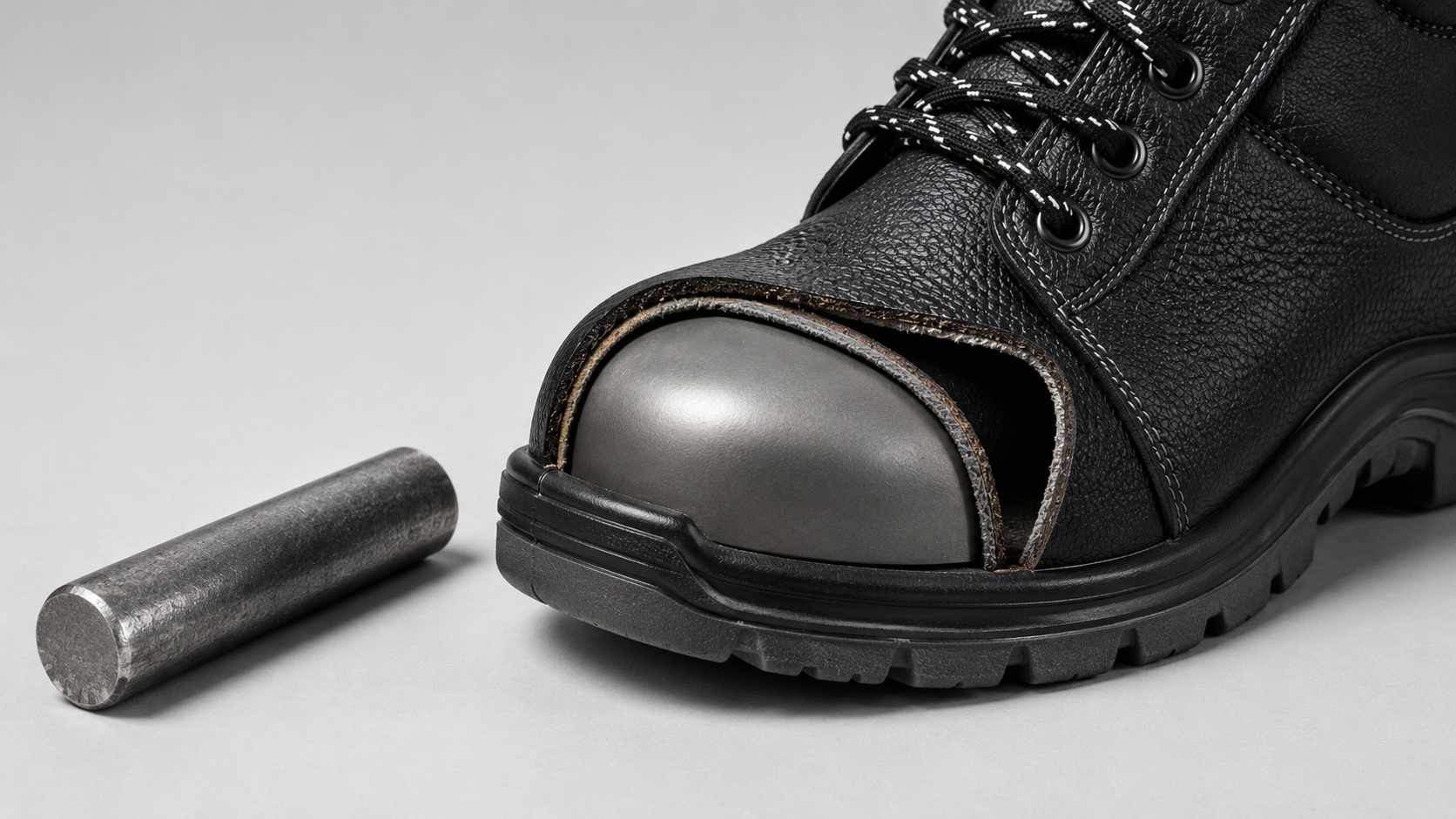
SB stands for Safety Basic. It means the shoe has a protective toe cap. This toe cap can handle a hit of 200 joules and a weight of 15 kN pressing on it. In simple words, it can protect the toe if something heavy falls on it, like a steel rod or a loaded pallet.
If a shoe has no code at all, do not trust its toe protection. SB is the minimum every real safety shoe should have.
S1 — SB Plus a Few Useful Extras
S1 has everything SB has, plus these four things:
- No open seam at the heel, so dirt and liquid cannot enter
- Antistatic protection, so the shoe does not build static charge near electrical equipment or flammable dust
- Extra cushioning in the heel, which helps a lot during long shifts on hard floors
- Sole that resists fuel and oil
S1 shoes are good for indoor, dry places — warehouses, light factory work, workshops. Not for places with sharp objects on the floor or standing water.
S1P — S1 Plus Protection From Nails
Add a “P” and the shoe gets a steel or hard plate inside the sole. This plate stops sharp objects like nails from going through. It is tested to stop at least 1100 N of force from a 4.5mm nail.
Use S1P shoes on any site where nails, loose screws, or sharp debris may be on the ground — which means most construction sites.
S3 — The Most Common “Safety Shoe”
S3 has everything S1P has, plus one more thing: a grip sole with a pattern (cleats). This sole is tested on wet tile and on oily steel, so it grips well even on slippery floors.
S3 covers all the basics — impact protection, nail protection, and better grip. This is usually the right choice for construction sites, factories, and outdoor work.
If your team works outside, on rough ground, or near loose metal and nails, choose S3, not S1.
S5 — S3 for Wet and Rough Conditions
S5 is less common. Instead of leather, the whole shoe is made from waterproof rubber or plastic. This is used in places like foundries, chemical plants, or fish processing units — anywhere the shoe needs to be washed with water regularly or stand in water for long hours.
Extra Letters That Matter Too
Apart from the S-codes, a few more letters appear on labels. These also matter for daily comfort and safety:
| Code | What It Means |
| SRC | The sole is tested for grip on both wet tile and oily steel. Good if your floor has mixed surfaces, like a loading area next to a tiled canteen. |
| HRO | Heat-resistant sole. It can touch a hot surface up to 300°C for one minute without damage. Useful near welding areas, furnaces, or hot road work. |
| CI | Cold protection. Useful for outdoor work or cold storage, where the sole needs to block cold from the ground. |
| WR | The whole shoe resists water, not just the sole. |
These are not just extra words on a label. Each one means the shoe passed a specific test. If the letter is missing, that protection is missing too.
Common Mistakes Buyers Make
The biggest mistake is not buying a shoe with no certification — it is buying the wrong certified shoe for the job. For example:
- Buying S1 shoes for a construction site because they are cheaper, when S3 was needed
- Using S3 shoes in a food area where oil resistance mattered more than nail protection
- Giving shoes with no HRO rating to a worker near a furnace, simply because no one checked the label before ordering in bulk
Before your next order, walk around the site and ask three simple questions:
- Are there loose nails, rods, or sharp waste on the ground? → You need P (S1P or higher)
- Is the floor wet, oily, or a mix of surfaces? → You need SRC
- Is there heat, cold, or standing water involved? → You need HRO, CI, or WR
The label on a safety shoe is not just decoration. It tells you exactly what the shoe can do. Read it the same way you would read any safety specification — carefully, before you buy.
Allen Cooper makes safety footwear tested to IS 15298 and EN ISO 20345, covering SB to S3 ratings, built for Indian industrial and construction sites. Browse the full range on our Products page, or contact us for help choosing the right shoe for your site.